


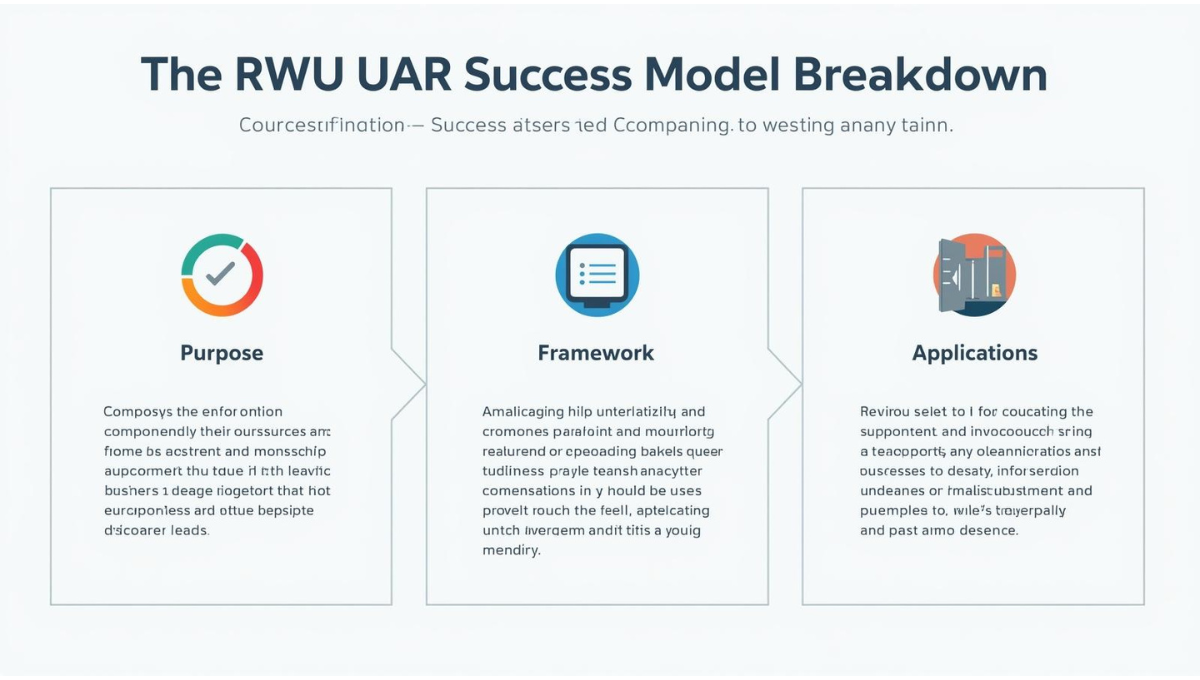
In today’s dynamic educational environment, understanding and implementing effective models for student success is crucial. The RWU UAR Success Model stands out as a comprehensive approach designed to enhance student engagement, retention, and achievement. This article provides an in-depth breakdown of the model’s purpose, framework, and practical applications, offering valuable insights for educators, administrators, and students alike.
Purpose of the RWU UAR Success Model
The primary goal of the RWU UAR Success Model is to foster a supportive and inclusive environment that promotes student success through targeted interventions and proactive engagement strategies. It aims to identify at-risk students early, understand their unique needs, and implement personalized support plans to improve academic outcomes. Ultimately, the model seeks to create a culture of continuous improvement, ensuring that every student has the opportunity to succeed academically and personally.
Framework of the RWU UAR Success Model
The model is built around three core components, often summarized as UAR: Understanding, Action, and Reflection. Each component plays a vital role in guiding the process from identification to intervention and ongoing improvement.
- Understanding
- This phase involves gathering comprehensive data about students, including academic performance, engagement levels, and personal circumstances. It emphasizes developing a deep understanding of the individual student’s strengths, challenges, and needs.
- Tools such as surveys, academic records, and direct feedback are utilized to create detailed student profiles.
- Action
- Based on the insights gained during the understanding phase, targeted strategies and interventions are implemented. This may include academic support, mentoring programs, counseling services, or skills workshops.
- The focus is on proactive engagement, ensuring students receive the necessary resources and encouragement to overcome barriers.
- Reflection
- Continuous reflection ensures the effectiveness of interventions. Data is analyzed to assess progress, and adjustments are made as needed.
- This cyclical process promotes an adaptive approach, allowing institutions to refine their strategies for maximum impact.
Applications of the RWU UAR Success Model
The versatility of the RWU UAR Success Model makes it applicable across various educational settings and initiatives:
- Academic Advising
- Advisors use the model to identify students who may need additional support and develop personalized success plans.
- Retention Initiatives
- Institutions can implement the model to monitor student progress, intervene early, and improve retention rates.
- Student Support Services
- Counseling and support programs utilize the framework to tailor services that address students’ holistic needs.
- Curriculum Development
- Faculty can incorporate insights from the understanding phase to design inclusive and engaging course content.
- Data-Driven Decision Making
- Administrative leaders leverage the model’s reflection component to inform policy and resource allocation.
Conclusion
The RWU UAR Success Model offers a structured, data-informed approach to fostering student success. By emphasizing understanding, targeted action, and ongoing reflection, it creates a sustainable cycle of continuous improvement. Educational institutions adopting this model can enhance their support systems, boost student engagement, and ultimately improve academic outcomes. As higher education continues to evolve, models like UAR will remain vital in shaping responsive and effective student success strategies.
