


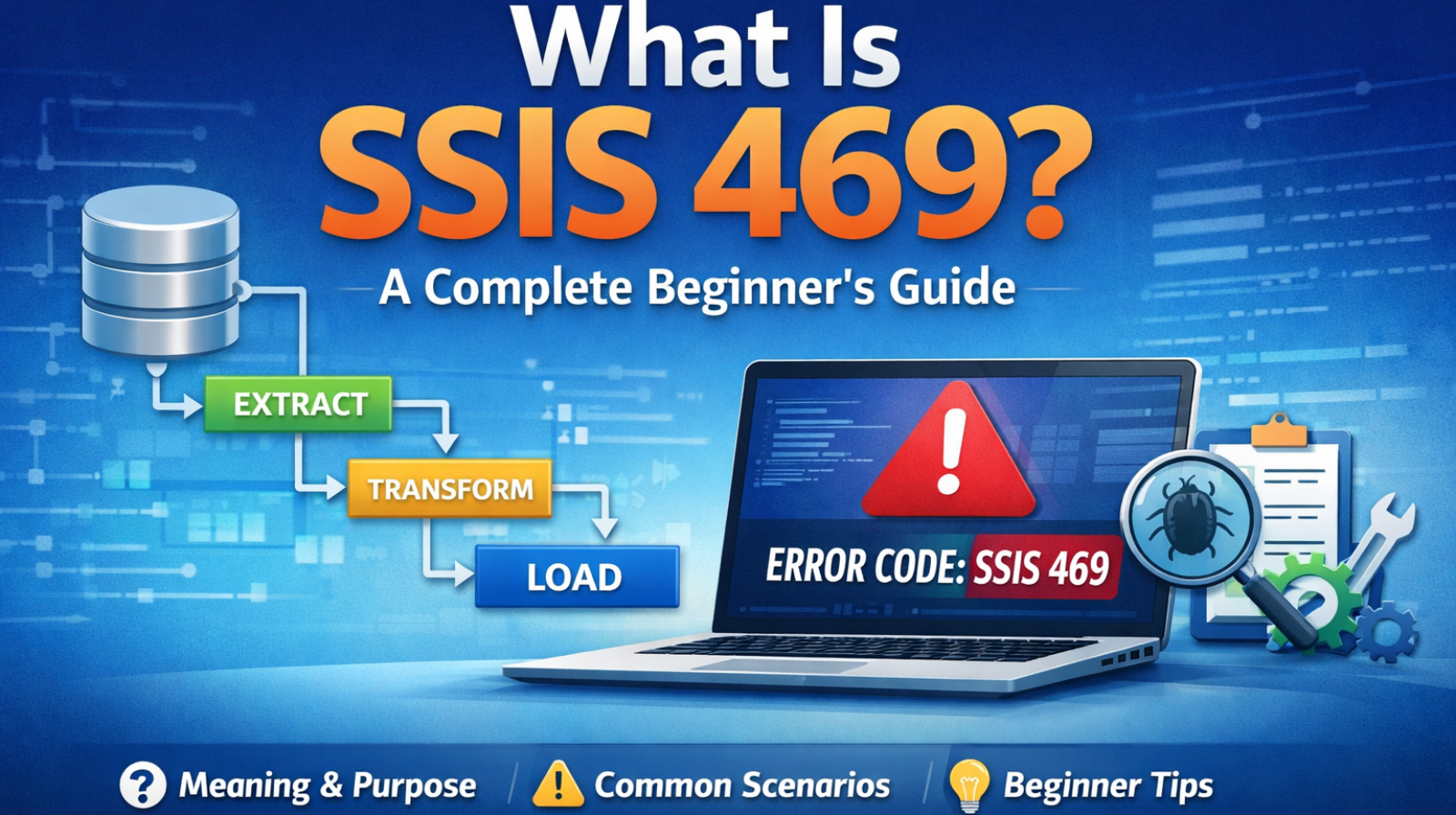
In the world of data integration and business intelligence, Microsoft SQL Server Integration Services (SSIS) plays a crucial role in moving, transforming, and managing data. While working with SSIS, users often come across unfamiliar codes, identifiers, or references—one of which is SSIS 469. For beginners, this term can be confusing and even intimidating.
This complete guide explains what SSIS 469 is, why it matters, how it is used, and what beginners should know to work with it confidently. By the end of this article, you will have a clear understanding of SSIS 469 and how it fits into modern data workflows.
Understanding the Basics of SSIS
Before diving into SSIS 469, it’s important to understand what SSIS itself is.
SQL Server Integration Services (SSIS) is a Microsoft platform used for:
-
Data extraction, transformation, and loading (ETL)
-
Data migration between systems
-
Automating data workflows
-
Cleaning and transforming raw data into usable formats
SSIS is widely used in enterprise environments where large volumes of data must be moved reliably and efficiently.
What Is SSIS 469?
SSIS 469 is commonly referenced as an internal identifier, error classification, or configuration-related marker within an SSIS environment. It is not a standalone tool or product but rather a technical reference associated with SSIS package execution, validation, or integration behavior.
For beginners, SSIS 469 usually appears in:
-
Error messages or logs
-
System-generated references
-
Debugging or execution reports
-
Deployment or runtime diagnostics
In simple terms, SSIS 469 helps identify a specific condition, process state, or issue occurring within an SSIS package.
Why SSIS 469 Matters
Although it may look like a random number, SSIS 469 plays an important role in helping developers and administrators understand what is happening behind the scenes.
Key Reasons SSIS 469 Is Important
-
Helps diagnose execution or deployment problems
-
Assists in tracking package behavior during runtime
-
Supports troubleshooting in complex ETL pipelines
-
Improves visibility into SSIS system operations
Ignoring SSIS-related identifiers like 469 can make debugging harder and slow down issue resolution.
Common Scenarios Where SSIS 469 Appears
Beginners usually encounter SSIS 469 in specific situations. Understanding these scenarios makes it easier to interpret what’s going on.
1. Package Execution Errors
SSIS 469 may appear when a package fails during execution due to:
-
Incorrect data mappings
-
Connection manager failures
-
Permission or authentication issues
2. Validation and Configuration Issues
SSIS validates tasks before execution. SSIS 469 can surface when:
-
Variables are misconfigured
-
Parameters are missing or mismatched
-
Environment references are incorrect
3. Deployment and Environment Setup
During deployment to SQL Server or SSIS Catalog:
-
SSIS 469 may indicate configuration mismatches
-
Environment variables may not be properly assigned
How SSIS 469 Fits Into the ETL Process
To better understand SSIS 469, it helps to see how it fits into the overall ETL lifecycle.
-
Extract – Data is pulled from source systems
-
Transform – Data is cleaned, converted, or validated
-
Load – Data is written to destination systems
SSIS 469 usually appears during the transform or load stages, when SSIS performs checks, validations, or encounters unexpected conditions.
Is SSIS 469 an Error?
A common beginner question is whether SSIS 469 always means something is wrong.
The answer: not always.
-
In some cases, SSIS 469 is informational
-
In others, it points to a warning or failure
-
Context from logs and messages is essential
Always review:
-
Associated error descriptions
-
Execution logs
-
Task-level messages
The number alone does not tell the full story.
How Beginners Should Approach SSIS 469
If you’re new to SSIS and encounter SSIS 469, follow these steps:
Step 1: Check the Full Error Message
Never focus only on the number. Read the complete message provided by SSIS.
Step 2: Review Logs and Reports
SSIS logging and execution reports often explain:
-
Which task failed
-
What caused the issue
-
When the issue occurred
Step 3: Validate Connections and Variables
Many SSIS 469-related issues are linked to:
-
Broken connections
-
Incorrect variable values
-
Missing parameters
Step 4: Test in Development Environment
Run the package in a development or test environment to isolate the issue safely.
Best Practices to Avoid SSIS 469 Issues
While SSIS 469 can’t always be avoided, good practices reduce how often it appears.
Recommended Best Practices
-
Use clear naming for variables and parameters
-
Enable detailed logging in SSIS
-
Validate packages before deployment
-
Test packages with real data samples
-
Keep SSIS and SQL Server updated
These habits help catch potential problems early.
SSIS 469 vs Other SSIS Identifiers
SSIS uses many internal references similar to 469. Beginners often confuse them with version numbers or features.
| Identifier Type | Purpose |
|---|---|
| Execution IDs | Track package runs |
| Error Codes | Identify failures |
| Reference Numbers | Log system events |
SSIS 469 falls into the category of system-level references used for monitoring and diagnostics.
Who Should Learn About SSIS 469?
Understanding SSIS 469 is useful for:
-
Beginners learning SSIS fundamentals
-
Data analysts working with ETL pipelines
-
SQL Server administrators
-
BI and data integration professionals
Even basic familiarity can save hours during troubleshooting.
Frequently Asked Questions (FAQ)
Is SSIS 469 a version of SSIS?
No. SSIS 469 is not a version number. It is a technical reference or identifier used within SSIS operations.
Can SSIS 469 be fixed?
If it represents an error or warning, fixing the underlying configuration or data issue usually resolves it.
Do all SSIS packages encounter SSIS 469?
Not necessarily. It appears only in certain execution or configuration scenarios.
Final Thoughts
SSIS 469 may seem complex at first, but it becomes much easier to understand with the right context. It is not something to fear—it’s a signal that helps you understand what SSIS is doing internally.
For beginners, the key takeaway is simple:
SSIS 469 is a helpful indicator that provides insight into SSIS package behavior, execution, and configuration.
By learning how to interpret it and respond correctly, you take a big step toward mastering SSIS and building reliable, professional data integration solutions.
